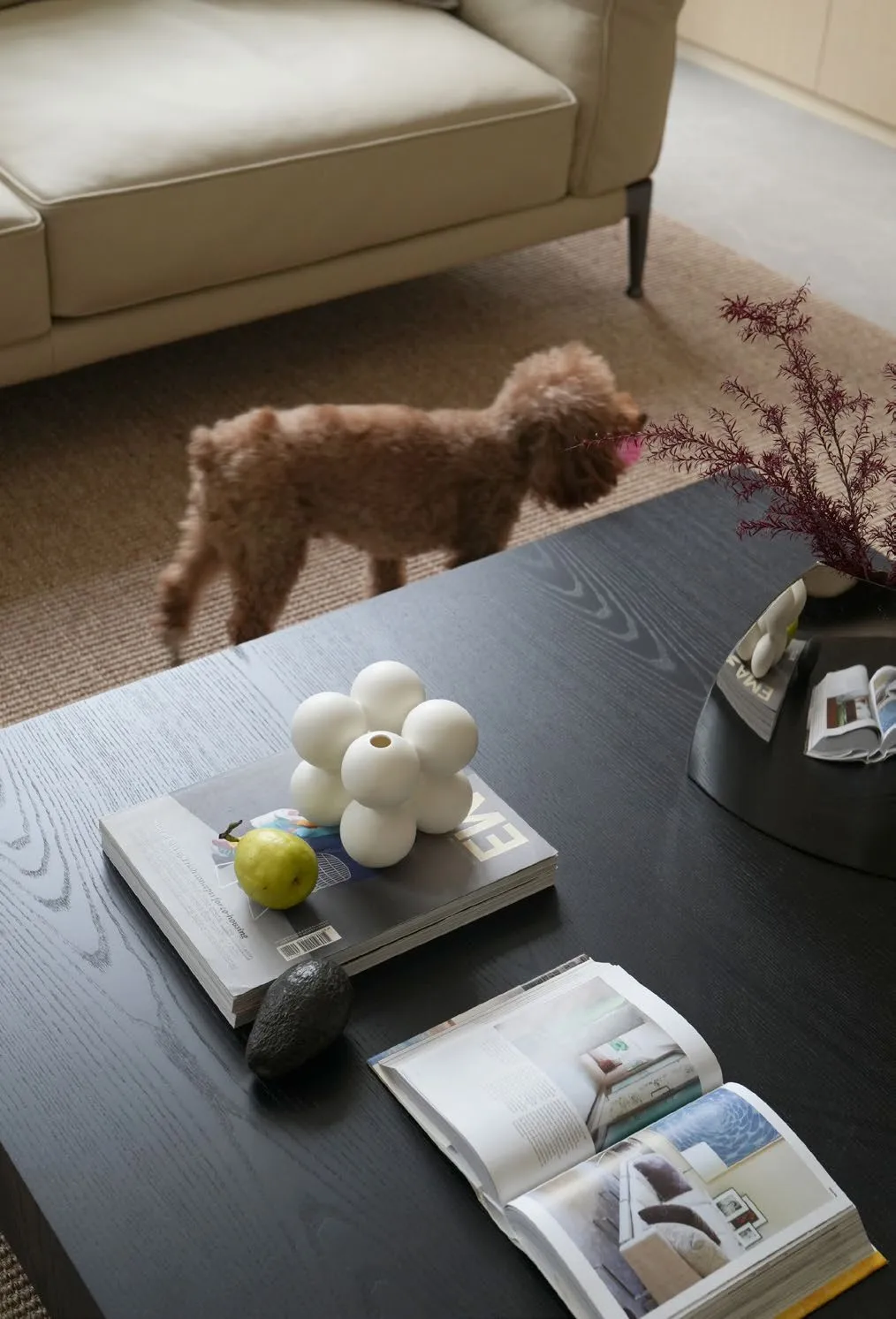
The phrase “aging-in-place” tends to summon a catalogue: grab bars, ramps, alarm buttons. Hardware, bolted on at the end.
We think of it differently. In Z Residence, almost nothing announces itself as assistive — yet thresholds disappear, circulation is generous enough for two people walking together, light switches sit where a tired hand expects them, and the bath is a room you walk into, not climb into.
The trick is that none of these decisions cost beauty. A wider doorway is also a better view. A flush threshold is also a cleaner line. Stone chosen for grip underfoot is also stone with a softer, honester surface.
All of it depends on first understanding the person who lives there. Aging-in-place has no universal answer — at the same age, one person needs support at every turn, another simply wants a home that never trips them or shouts at them. So before anything is drawn, we keep asking: who lives here, how do they move through each room across a day, what do they care about most. The sofa in Z Residence was made to one resident’s habit — he likes to read and watch television half-reclined, so its depth and give were tuned to him; where standing up matters, a higher chair with arms carries that task instead. Beside the toilet we did not line the walls with grab bars; we reinforced the wall behind them, so a rail can later be fixed exactly where his body wants it, without touching the finish. Customization earned through conversation is what lets a home be both what it is now and ready for what comes.
Longevity is a design language, not a retrofit. The houses we like best are the ones that will not need to be apologized to in twenty years.